 (Image via
Taking charge of your vehicle’s basic care is an empowering step that can save you time, money, and stress. Having the right set of tools on hand transforms you from a worried passenger into a capable driver, ready to handle minor maintenance and unexpected roadside issues. This guide is here to support you on that journey. We have put together a list of fundamental tools that every car owner can benefit from, no matter your level of mechanical experience. You will learn what each tool does and why it deserves a place in your garage or trunk. Equipping yourself with these essentials provides peace of mind and builds a deeper connection with your vehicle. Let's get you set up for success.
The Foundation: Your Basic Tool Kit
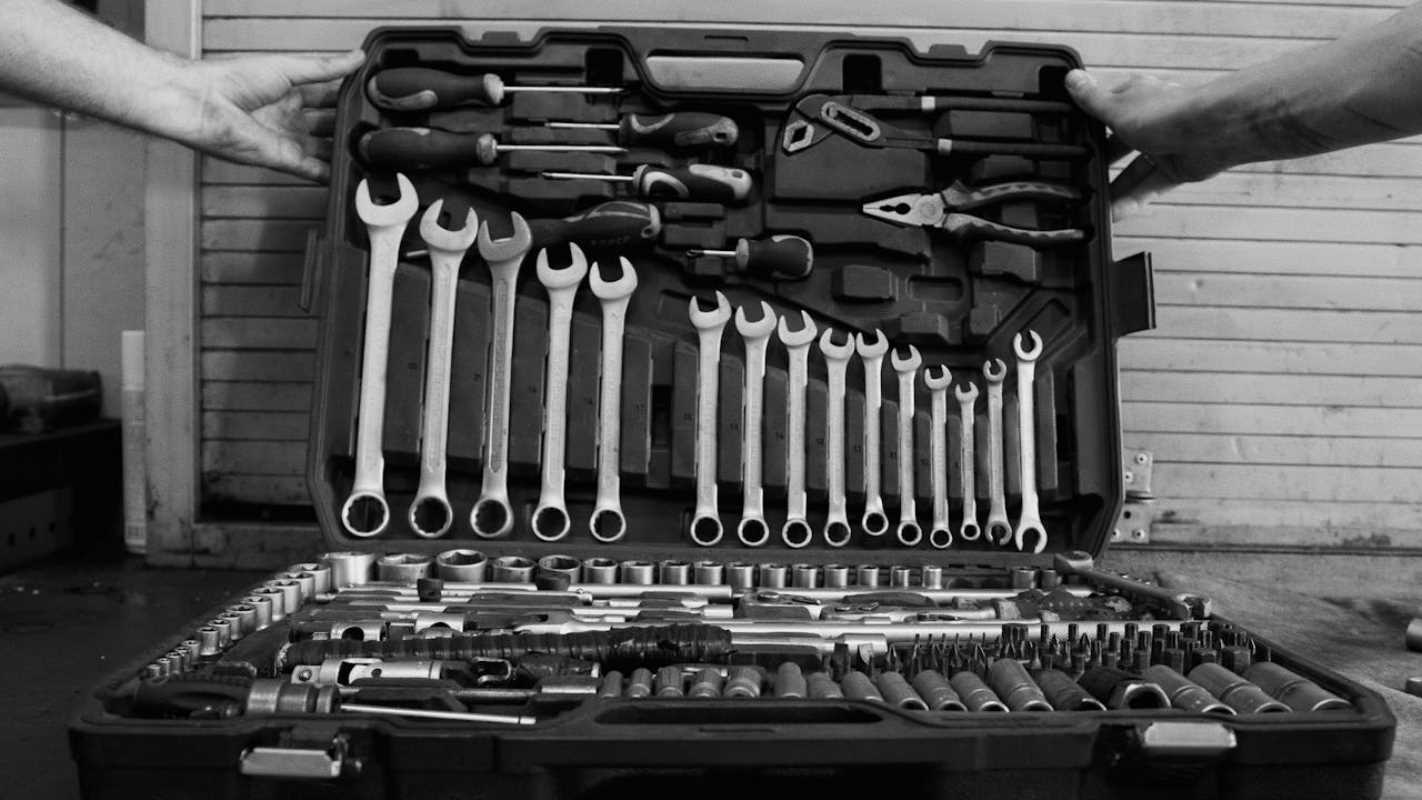
Building your collection starts with a solid foundation. A pre-packaged mechanic's tool set is a fantastic starting point because it bundles many essential items into one convenient case. These kits are designed to handle a wide range of common tasks, giving you everything you need for simple repairs like changing a battery or replacing an air filter. We’ve got you covered with a breakdown of the most important pieces to look for in a quality set.
Socket and Ratchet Set
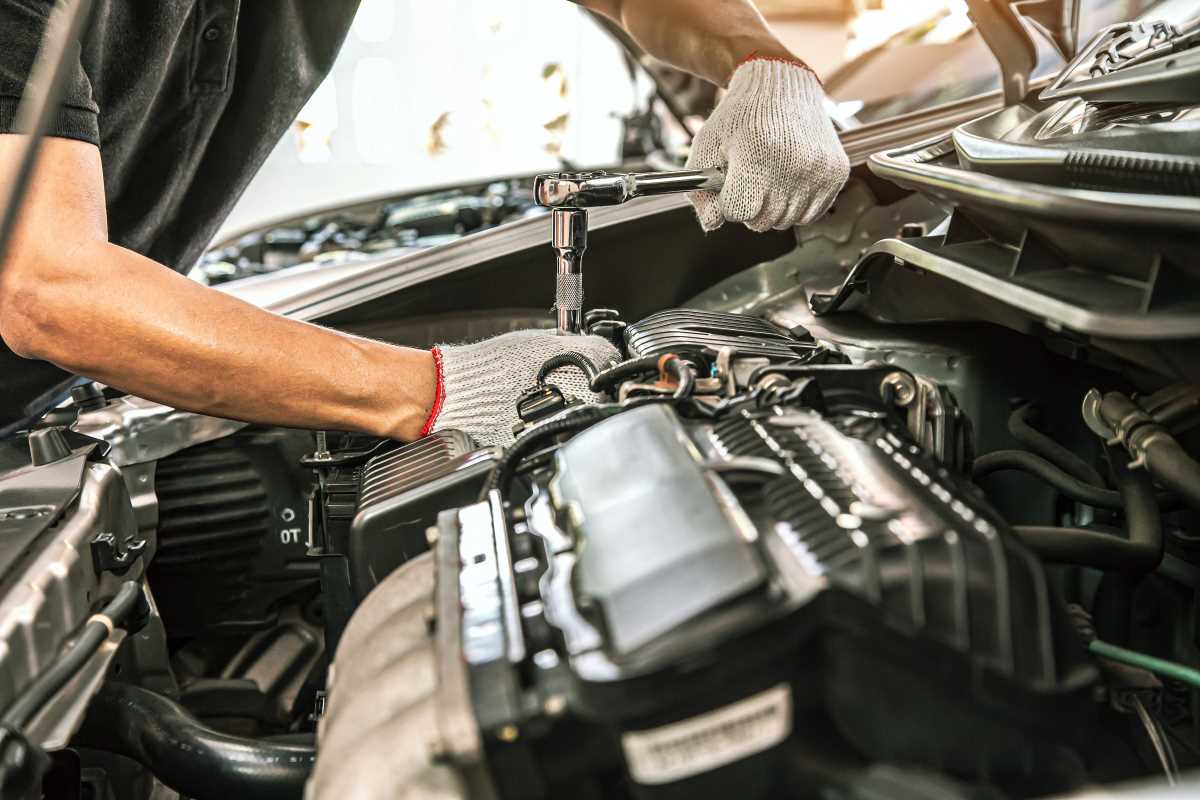
The heart of any mechanic’s toolkit is a good socket set. Sockets are the round attachments that fit over nuts and bolts, and the ratchet is the handle that turns them. Look for a kit that includes both metric (millimeters) and SAE (inches) sizes, as cars often use a mix of both. A standard set should include 1/4-inch, 3/8-inch, and 1/2-inch drive ratchets. The smaller drives are great for tight spaces, while the larger ones provide more leverage for stubborn bolts.
Wrenches for Every Occasion
Wrenches are your go-to for nuts and bolts that a socket can't reach. A combination wrench set is ideal, offering an open end on one side and a boxed end on the other. The boxed end provides a secure grip to prevent rounding off bolt heads, while the open end is useful for speed or limited access. Just like with sockets, having a full set of both metric and SAE sizes will ensure you are prepared for anything.
Screwdrivers and Pliers
You will also want a variety of screwdrivers, including multiple sizes of both Phillips head and flathead types. Many modern cars also use Torx (star-shaped) screws, so a set that includes Torx bits is a smart choice. A good assortment of pliers is also invaluable. Needle-nose pliers are perfect for grabbing small items in tight spots, while locking pliers (like Vise-Grips) can hold items securely, acting like a third hand.
Roadside Emergency Essentials
Some tools are less about maintenance and more about getting you safely out of a tough spot. These items should live in your car’s trunk at all times. Building your own emergency kit ensures you have high-quality gear you can rely on when you need it most.
Jumper Cables and Portable Jump Starter
A dead battery can happen to anyone. Jumper cables allow you to use another car's battery to start your own. Look for a heavy-gauge set (a lower gauge number is thicker) that is at least 16 feet long. This length gives you flexibility in how you position the two cars.
For even more convenience and independence, consider a portable jump starter. These compact lithium-ion battery packs can start your car without needing another vehicle. Many models also double as a power bank to charge your phone, making them incredibly useful. We encourage everyone to learn how to use either of these tools before an emergency strikes.
Tire Pressure Gauge and Portable Air Compressor
Proper tire pressure is crucial for safety, fuel economy, and tire longevity. A digital or dial tire pressure gauge gives you an accurate reading in seconds. Check your pressure monthly, as tires naturally lose air over time. The correct pressure for your car is listed on a sticker inside the driver’s door jamb, not on the tire itself.
A portable air compressor plugs into your car's 12-volt outlet and can inflate a low tire in minutes. It is far more convenient than searching for a gas station with a working air pump and can be a true lifesaver if you get a slow leak. Getting one means you can handle low tire pressure anywhere, anytime.
Lug Wrench and Jack
Most cars come with a basic scissor jack and a small lug wrench for changing a flat tire. While these work in a pinch, they can be difficult to use. We suggest upgrading to a four-way lug wrench, which provides much better leverage for breaking loose tight lug nuts. A hydraulic bottle jack or a small floor jack is also much more stable and easier to lift the car with than the standard scissor jack.
Diagnostic and Electrical Tools
Modern cars are complex, but some simple diagnostic tools can help you understand what's going on under the hood. These items empower you to identify problems and have more informed conversations with your mechanic.
OBD-II Scanner
Since 1996, all cars have been equipped with an On-Board Diagnostics (OBD-II) port, usually located under the dashboard on the driver's side. When your "Check Engine" light comes on, the car's computer stores a trouble code. An OBD-II scanner is a small device that plugs into this port and reads the code.
You can look up the code online to find out what triggered the light—it could be anything from a loose gas cap to a more serious engine issue. This knowledge helps you decide if it is a simple fix you can handle or if you need to see a professional.
Digital Multimeter
A digital multimeter is a must-have for diagnosing any electrical issue. It can measure voltage, current, and resistance. You can use it to test if your battery is holding a charge, check if a fuse has blown, or find out why a light is not working. While it might seem intimidating, learning the basics of a multimeter is straightforward and opens up a new level of DIY capability.
Lighting and Personal Safety
Working on your car often means dealing with dark, cramped spaces. Good lighting is not just a convenience; it is a safety necessity.
Work Light or Headlamp
A good work light will make any task easier and safer. Magnetic LED work lights can stick to the underside of the hood, providing bright, hands-free illumination. An even better option for many is a headlamp. It directs light exactly where you are looking, keeping both of your hands free to hold tools and parts.
Gloves and Eye Protection
Safety should always be your top priority. Keep a box of disposable nitrile gloves in your kit. They protect your hands from grease, oil, and other chemicals, and improve your grip on tools. More importantly, always wear safety glasses. Fluids can splash, and tools can slip. Protecting your eyes is non-negotiable.
Building your tool collection is a journey, not a race. Start with a basic kit and a few emergency essentials, and add to your collection as you gain confidence and tackle new projects. Each tool you acquire is an investment in your independence and knowledge.