Have you ever noticed how some drivers seem to replace their brakes every single year, while others go years without a squeak? Luck has very little to do with it. Your driving style plays a massive role in how long those pads last.
Aggressive driving is the ultimate brake killer. When you constantly accelerate and brake in rapid succession, you are literally grinding away your hard-earned money. Standard brake pads usually last between 25,000 and 65,000 miles, with the average driver needing a replacement around 40,000 miles.¹ But if you drive like you are on a racetrack, you will be lucky to hit the low end of that range.
Let's talk about the financial reality in 2026. Replacing just your brake pads can run you anywhere from $150 to $400 per axle.² If you ignore the warning signs and ruin your rotors too, that price easily jumps to $300 to $600 per axle.² And if you really let things go and damage the calipers or the master cylinder? You are looking at a bill of $1,500 or more.³ That is a massive hit to your budget.
The good news is that you can easily double the lifespan of your brakes. By making a few small, simple changes to how you handle your car every day, you can save hundreds of dollars and keep your vehicle out of the shop. Let's look at how you can start driving smarter.
Mastering the Art of Coasting and Anticipation
Think about your daily commute. How often do you see a red light ahead, yet keep your foot on the gas until the last possible second? This is where coasting comes in, and it is the easiest way to save your brakes.
Instead of rushing toward a stop, simply lift your foot off the accelerator early and let your car's natural momentum slow you down. It sounds simple because it is.
Why does this work? It all comes down to basic physics. When you use your brakes, they convert kinetic energy into heat. Heat is the absolute number-one enemy of your brake pads. Think of your brake pads like a bar of soap. If you use them gently under cool water, they last a long time. If you scrub furiously under boiling water, they melt away in no time. Extreme heat softens the friction material, which makes it wear down incredibly fast. By coasting, you reduce the amount of speed your brakes have to scrub off, keeping them cool and intact.⁵
Try to look 10 to 15 seconds ahead of your vehicle. If you see brake lights or a changing signal in the distance, let off the gas immediately.
Another great trick is engine braking, especially when you are driving down long, steep hills. Instead of riding your brakes the whole way down, shift your car into a lower gear. Even modern automatic cars have a sport or manual mode that lets you do this. This forces the engine to control your speed, taking the massive load off your brake pads.
The Electric Vehicle Exception
If you drive an electric vehicle or a hybrid, you have a different set of rules. Thanks to regenerative braking, EV brake pads can last up to 100,000 miles.⁴ But this comes with a catch.
Because EV friction brakes are rarely used, moisture, road salt, and debris can build up on the rotors, leading to rust and pitting.⁴ Underuse is actually the biggest threat to EV brakes.
To fix this, EV drivers should perform a brake scrub once a week. In a safe, traffic-free area, firmly and intentionally press the brake pedal. This bypasses the regenerative system, engages the physical pads, and cleans the rust and debris off the rotors.
The Hazards of Heavy Foot Syndrome
We all know someone who drives with a heavy foot. Maybe you do it too without realizing. Tailgating at high speeds is one of the worst habits for your brakes.
When you follow the car in front of you too closely, you are constantly making sudden, sharp brake adjustments. This rapid on-and-off braking does not give your brake system any time to cool down. The temperature spikes, and that is when real damage happens.
One of the biggest issues with high brake temperatures is a process called glazing. When your pads get too hot, the friction material actually melts and hardens into a smooth, glassy surface. Glazed brakes lose their stopping power, make terrible squealing noises, and need to be replaced long before they actually wear down.
The golden rule here is gradual deceleration. Give yourself plenty of space between your car and the one ahead. This simple buffer allows you to slow down gently, keeping your brake temperatures low and your pads healthy.
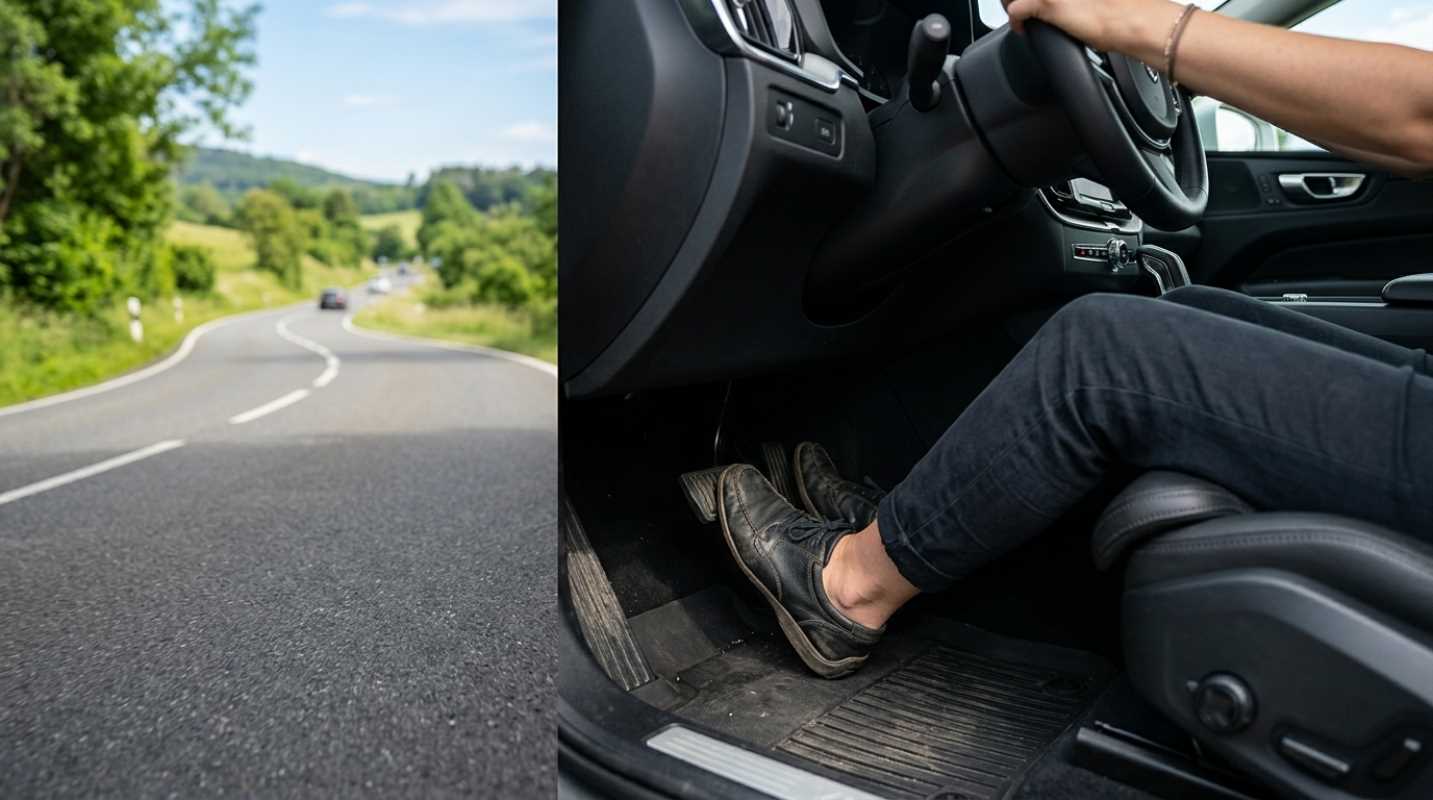
Also, make sure you are not a two-footed driver. If you rest your left foot on the brake pedal while your right foot is on the gas, you are likely dragging your brakes. Even the slightest pressure keeps the pads in contact with the rotors, creating constant friction and heat.
Weight Matters and Decluttering for Better Performance
Have you looked in your trunk lately? If it looks like a mobile storage unit, you are doing your brakes a major disservice.
It is simple math. A heavier car requires far more force to stop than a light one. When you pack your car with heavy, unnecessary cargo, your brakes have to work twice as hard to bring you to a halt. This extra strain increases friction, raises temperatures, and wears down your pads and rotors much faster.
How can you fix this? Here are a few practical tips to keep your vehicle light
• Clean out the trunk: Remove heavy sports equipment, tools, or boxes that you do not need for your daily drive.
• Remove roof racks: Take off heavy roof boxes or bike racks when you are not using them to reduce weight and aerodynamic drag.
• Travel light: Keep only the neededs in your cabin and cargo areas.
By keeping your car light, you do not just save your rotors and pads. You also get better gas mileage. It is a win-win for your wallet.
Beyond Driving Habits and the Role of Routine Maintenance
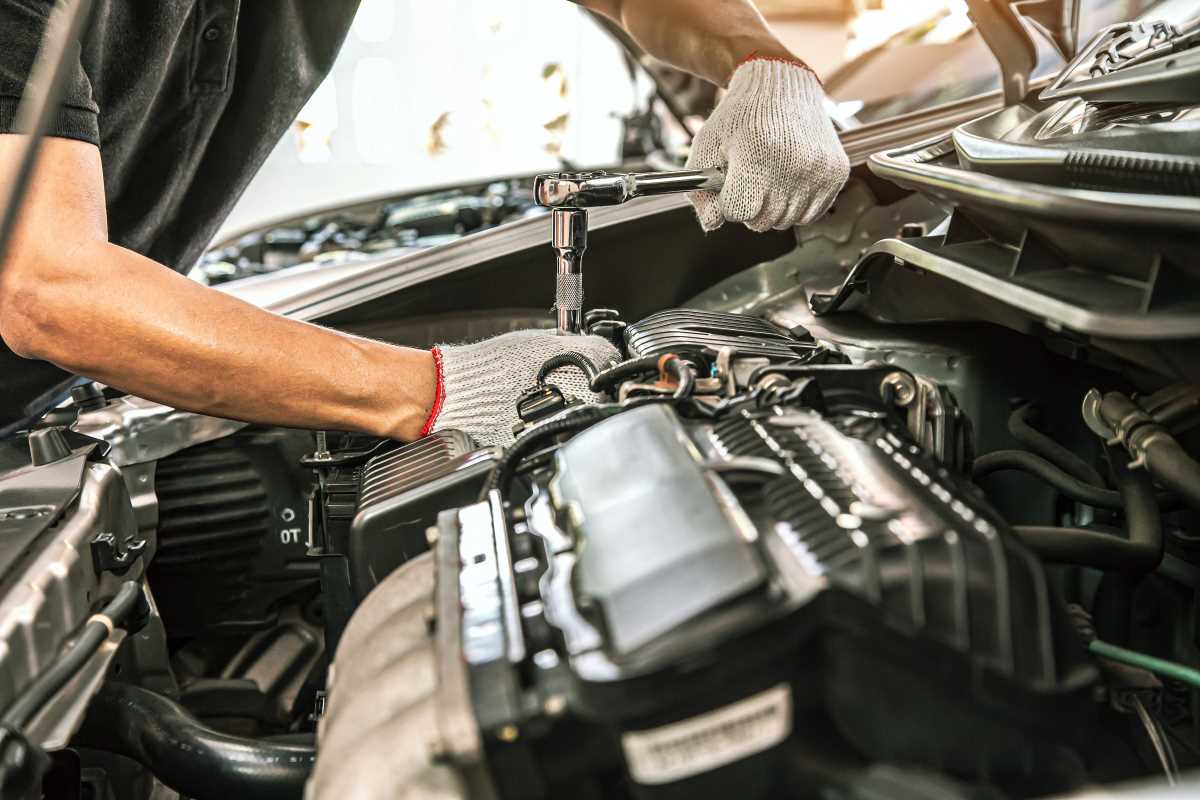
Although your driving style is the most important factor, you cannot ignore basic maintenance. Even the gentlest driver needs to keep an eye on the hardware.
You need to know the warning signs of worn brakes. If you hear a high-pitched squealing or a harsh grinding noise, your pads are telling you they are finished. A vibrating brake pedal is another red flag, often indicating that your rotors are warped.
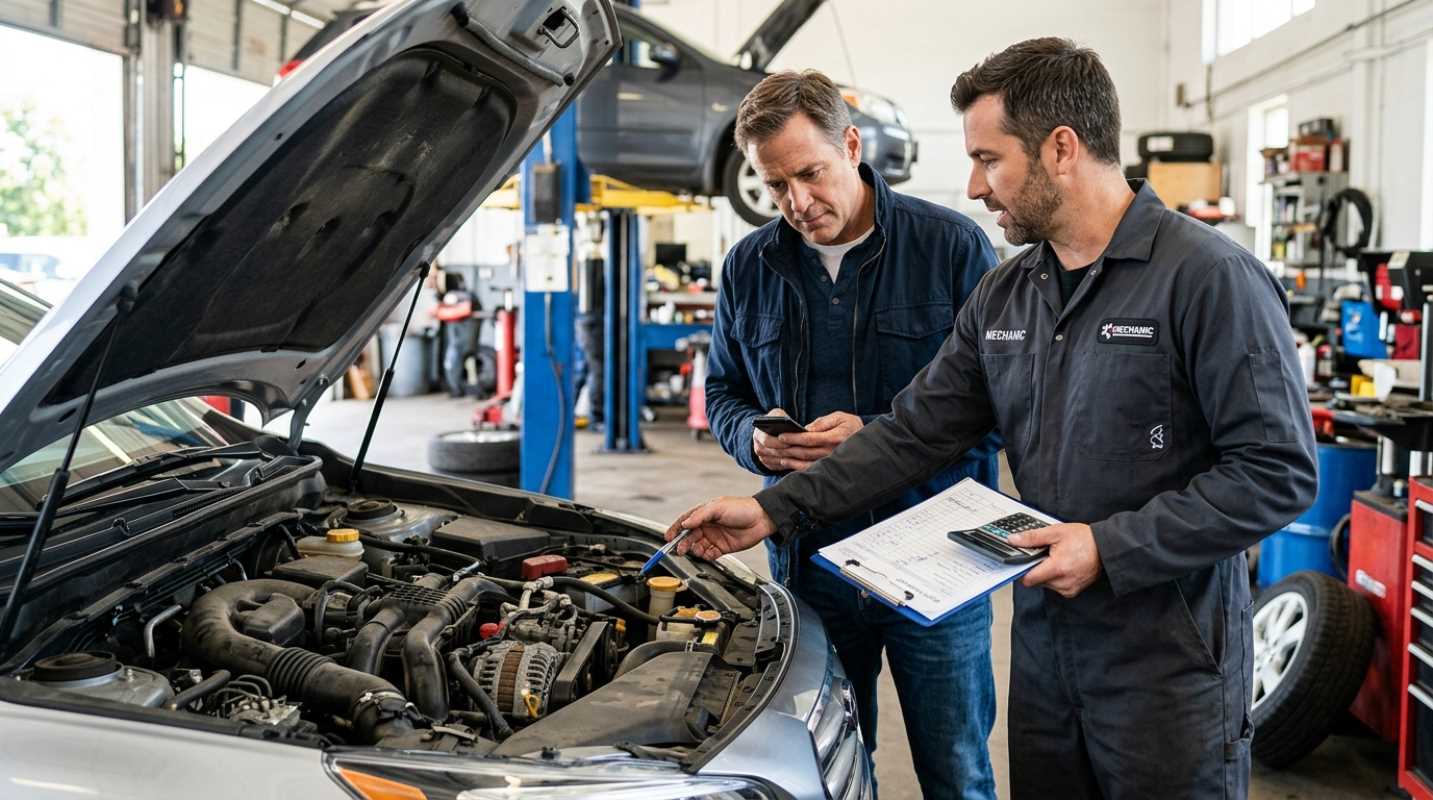
To keep things running smoothly, you should have your brakes inspected every single time you get your tires rotated. This usually happens every 5,000 to 7,500 miles. Catching a stuck caliper pin or uneven pad wear early can save you from replacing the entire system.
Do not forget about your brake fluid either. Brake fluid naturally absorbs moisture from the air over time. Water-contaminated fluid lowers the boiling point of the system, which can make your brakes feel spongy and unresponsive. It also causes internal rust. Plan to flush your brake fluid every 18 to 24 months to keep things safe.
Finally, do not cheap out on parts when it is time for a replacement. Cheap pads wear out quickly and damage your expensive rotors. Investing in high-quality ceramic pads and coated rotors is always the smarter financial move because they last much longer.
If you want to keep your vehicle running smoothly and safely, having the right parts and professional service matters.
Driving Smarter for a Safer and Smoother Ride
At the end of the day, extending the life of your brakes requires a shift in mindset. You want to transition from reactive driving, where you constantly react to the car in front of you, to proactive driving, where you anticipate the road ahead.
By adopting these simple habits, you are not just saving money on brake pads and rotors. You are also creating a smoother, more relaxing drive for yourself and your passengers. There is a great peace of mind that comes with knowing your braking system is healthy and ready when you truly need it.
So, the next time you get behind the wheel, take a deep breath, ease off the gas early, and let your momentum do the work. Your wallet will thank you.
Sources:
1. Zavala's Auto Repair
https://www.zavalasautorepairil.com/blog/how-long-do-brake-pads-last
2. Car Medics Autowerks
https://carmedicsautowerks.com/brake-pad-replacement-cost/
3. Rohnert Park Transmission
https://rohnertparktransmission.com/blog/brake-pad-replacement-cost-2026
4. EV Parts Solutions
https://evpartssolutions.com/blogs/news/why-ev-brake-pads-last-longer-and-when-they-still-need-replacing
5. Max Brakes
https://us.maxbrakes.com/how-to-extend-the-lifespan-of-your-brakes-us