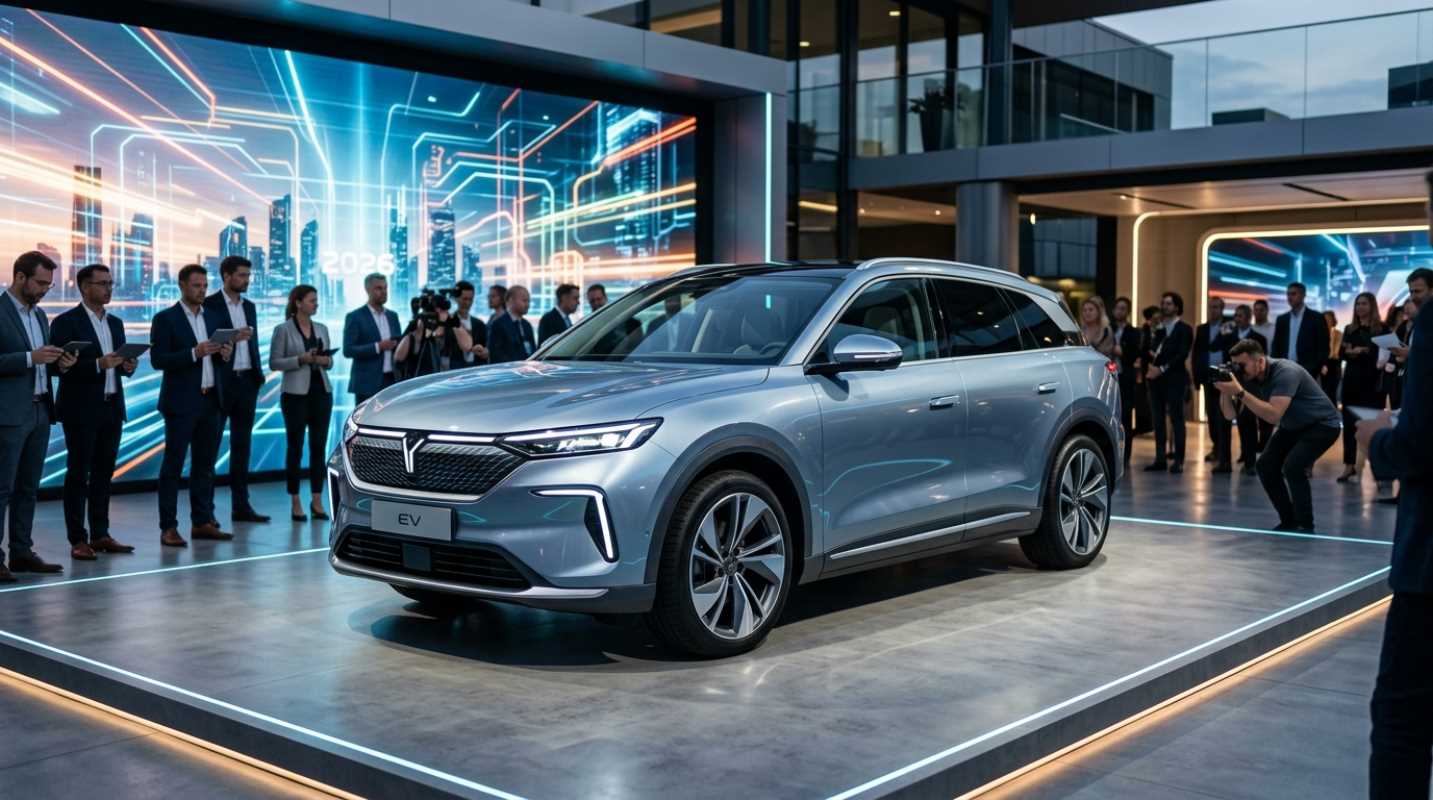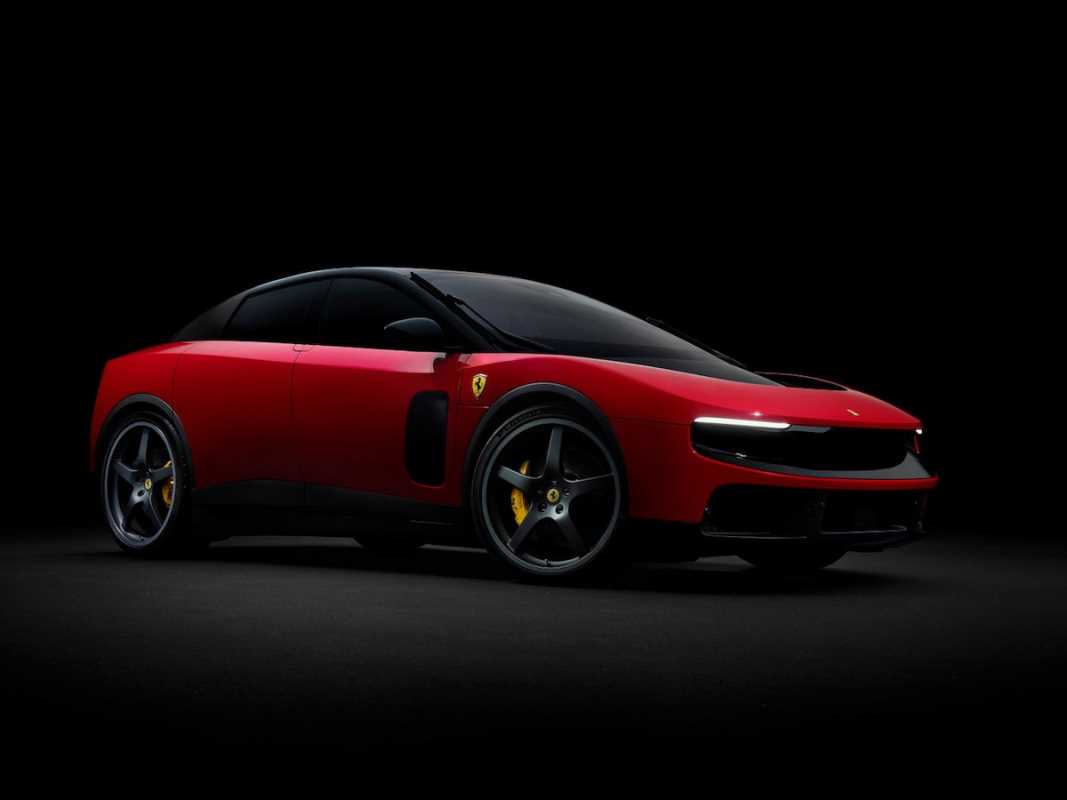
Ferrari has never done anything quietly. From the shriek of a V12 at full throttle to the polarizing arrival of the Purosangue SUV, Maranello has always operated on the edge of what its devoted fanbase will accept. But nothing in recent memory has provoked a reaction quite like the Luce — Ferrari's first fully electric vehicle, unveiled on May 25, 2026, in the symbolic setting of the Vela di Calatrava in Rome.
The car is extraordinary by any measurable standard: over 1,000 horsepower, a 329-mile electric range, and a starting price of €550,000 (roughly $640,000). It is also, depending on who you ask, either a visionary masterpiece or a betrayal of everything the Prancing Horse stands for.
This guide covers everything you need to know about the Ferrari Luce — what it is, how it performs, what it costs, and why it has sparked one of the most heated design debates the automotive world has seen in years.
What Is the Ferrari Luce?
The Ferrari Luce (Type F222) is a battery-electric executive liftback — a four-door, five-seat car built on a dedicated EV platform developed entirely in-house at Maranello. The name "Luce" means "light" or "illumination" in Italian, and Ferrari has described it as the beginning of a new naming philosophy for the brand as it enters the electric era — a word tied to clarity, simplicity, and future-facing design.
It is, by every metric, a historic vehicle. It is Ferrari's first production EV. It is Ferrari's first five-seat car. It is the first model in the brand's history designed in significant collaboration with an outside creative agency — specifically LoveFrom, the design collective founded by former Apple Chief Design Officer Sir Jony Ive and designer Marc Newson. Its arrival marks a fundamental shift for a company that, not long ago, openly insisted that a fully electric Ferrari would never exist.
Powertrain and Performance
The Luce is powered by four permanent-synchronous electric motors — one per wheel — drawing from an 800-volt, 122-kWh NMC battery pack supplied by SK On. Combined output stands at 1,035 horsepower (772 kW), and the car can reach 60 mph in approximately 2.5 seconds on its way to a top speed of around 192 mph. By any measure, those are supercar numbers delivered in a five-seat executive body.
The quad-motor setup enables genuine torque vectoring across all four wheels, which Ferrari says contributes to a handling character that remains true to the brand's performance DNA even without the mechanical drama of a combustion engine. The 800-volt architecture supports DC fast charging at up to 350 kW, meaning charge sessions can be kept relatively brief for a battery of this size. WLTP range is rated at 329 miles — a figure that comfortably exceeds most rivals in the luxury EV segment.
Design and Interior: The Jony Ive Touch
The design of the Luce was entrusted to LoveFrom with a degree of creative latitude that is unusual for Ferrari, a brand historically protective of its design language. The results are unmistakably Jony Ive: smooth, continuous, convex surfaces with no sharp edges or hard angles. The body is tall and rounded compared to Ferrari's traditional low-slung silhouettes, shaped in part by aerodynamic priorities. The rear doors open as coach doors, giving the car an executive-saloon character suited to the wealthy families Ferrari is explicitly targeting with this model.
Inside, Ive's influence is immediately apparent. The cabin features Apple Watch-style crown controls on the screens, an infotainment panel with an iPad-like sensibility, and extensive use of Gorilla Glass throughout. Crucially, Ferrari and LoveFrom made a deliberate decision to resist the trend toward giant touch-first interfaces, instead incorporating physical controls and tactile interaction as a central design philosophy. The result is a cabin that feels simultaneously like a technology showcase and a reaction against the soulless glass slabs found in many modern EVs.
Leather seating for five, a 600-liter trunk, and premium materials throughout confirm that the Luce is aimed squarely at buyers who want a usable, luxurious family car with Ferrari's badge — not a track-focused two-seat sports car in EV form.
Who Is It For?
Ferrari has been transparent about its ambitions with the Luce: the car is designed to attract a new kind of buyer. Chief Commercial Officer Enrico Galliera described the target as families with substantial wealth who want comfort, technology, and five seats without sacrificing the performance and prestige that Ferrari represents. The car is also widely seen as a deliberate play for buyers in China and Silicon Valley — demographics that have fueled the growth of luxury EVs, and who may not have previously been Ferrari customers.
This is a meaningful strategic pivot. Ferrari's existing clientele skews toward passionate driving enthusiasts who prioritize the combustion experience above all else. The Luce opens the door to buyers for whom the electric powertrain is not a compromise but a preference, and for whom a fast, beautiful, Jony Ive-designed executive car is precisely the right product. Whether those two audiences can coexist under the same prancing horse badge is one of the central questions the Luce raises.
The Design Controversy: A Brand at War with Its Own Identity
No section of a Ferrari Luce guide would be complete without addressing the elephant in the room. The reaction to the Luce's design, from the moment the car was fully revealed, has been overwhelmingly and vocally negative among the traditional Ferrari fanbase. The backlash has been swift enough — and loud enough — to move markets.
When Ferrari shares closed in Europe on the day of the unveiling, the stock was trading at around 309.20 EUR per share. Within days, the stock had fallen more than 8%, with analysts attributing the reaction to what one bluntly described as "design hate." Anthony Dick, an auto analyst at Oddo BHF, called it "by far the sharpest reaction we've seen for a car design — the market has spoken." Ferrari's former leadership piled on. Italian Deputy Prime Minister and Transport Minister Matteo Salvini wrote on X that the Luce "looks like anything but a car from the Prancing Horse," invoking the name of Ferrari founder Enzo Ferrari to underline his displeasure.
The criticism has several distinct strands. The most fundamental is aesthetic: the car's rounded, tall, edge-free silhouette looks nothing like a Ferrari to many observers. Where the brand's heritage runs through low, aggressive, aerodynamically sculpted shapes, the Luce is smooth and almost architectural. Critics have called it more "product design" than passionate automotive — a characterization that, given Jony Ive's background, carries an obvious edge.
A second strand of criticism concerns timing and context. Competitors, including Lamborghini and Porsche, have been pulling back from EV commitments in the face of softer luxury-EV demand, with Lamborghini canceling its upcoming EV entirely. Ferrari, in this reading, has sailed directly into a headwind. Creative Bloq's analysis was pointed: "At the very moment a V12 has become the ultimate luxury statement — raw, inefficient and utterly irreplaceable — Ferrari has chosen to whisper when its entire history demands a scream."
Automotive YouTuber TheSketchMonkey published a redesign of the Luce that went viral, replacing the rounded form with sharper, more traditionally exotic proportions. The exercise resonated with fans because it illustrated, visually, exactly what they felt was missing. TheSketchMonkey also suggested Ferrari's design team may have been "nervous" about the launch — an observation that stung given the defensive posture Ferrari's executives subsequently adopted.
That defensiveness has been notable. Ferrari's Chief Designer, Flavio Manzoni, has said repeatedly that there is "no design without innovation" and that Ferrari deliberately avoided what he called the "déjà vu effect" — the trap of simply reskinning existing Ferrari design language onto a new platform. Jony Ive, for his part, framed the negative reaction as a predictable and even healthy part of introducing genuinely new ideas, noting that people tend to process unfamiliar things through familiar reference points first.
Not everyone has been critical. Ferrari executives report that previews with non-traditional Ferrari clients — the new buyers the car is explicitly designed to attract — received "extremely positive" feedback. Analysts at RBC Capital Markets drew a direct parallel to the reaction when Ferrari unveiled the Purosangue SUV in 2022, which was similarly criticized by purists before going on to become one of the brand's best-selling models, with demand exceeding supply. "While the Luce's design departs from Ferrari tradition, the company indicated that the driving experience remains true to the brand," they noted, urging investors not to be "overly concerned."
The honest answer is that the design debate will not be settled until buyers take delivery, journalists drive the car, and the residual values of the first examples become known. The Purosangue precedent suggests Ferrari may yet win the argument. But the Luce has provoked something the Purosangue did not: the sense that Ferrari has not merely stretched its identity, but introduced an entirely different one.
Pricing and Availability
The Luce is priced at €550,000 in Europe, with equivalent pricing for the US and other markets to be confirmed. Deliveries are scheduled to begin in the fourth quarter of 2026. Production takes place in Maranello, and Ferrari has confirmed that all major components — including the electric motors and battery system management — are developed and manufactured in-house, consistent with the brand's emphasis on proprietary technology.
Given Ferrari's production cap of approximately 14,000 cars per year across its entire lineup, the Luce will be produced in limited quantities, and demand from the target audience of new buyers is expected to be strong. Whether allocation will be prioritized for existing Ferrari clients or new customers will be an interesting test of how seriously Ferrari takes its stated goal of broadening its customer base.
Final Verdict
The Ferrari Luce is a technically remarkable vehicle. A quad-motor EV delivering over 1,000 horsepower, nearly 330 miles of range, and 0–60 in 2.5 seconds — packaged in a five-seat car with a Jony Ive-designed interior at Ferrari's legendary Maranello factory — represents a genuine engineering achievement. Its ambitions are clear, its target audience is real, and its strategic logic is defensible.
Whether it is a Ferrari in any meaningful emotional sense is a question the brand has, for better or worse, left entirely open. The Luce does not sound, look, or behave like any Ferrari that came before it. That may prove to be its greatest strength or its defining flaw — but it will not be forgiven by the faithful quickly, if at all. What is certain is that the Luce has announced itself as one of the most consequential and contested cars of the decade, and that Ferrari has committed to this direction as the foundation of its electric future, not a footnote in it.
Sources
Ferrari Luce — Official Ferrari (via Reuters/Handout) https://www.ferrari.com
CNN Business — Ferrari's First EV "Luce" Unveiled https://www.cnn.com/2026/05/26/cars/ferrari-new-electric-vehicle-luce-intl-hnk
CNBC — Ferrari Shares Fall After Luxury Carmaker Launches First Full EV https://www.cnbc.com/2026/05/26/ferrari-stock-shares-luce-electric-vehicle-ev-launch.html
CNBC — Ferrari Stock Falls After EV Launch; Don't Be "Overly Concerned": Citi https://www.cnbc.com/2026/05/28/ferrari-stock-falls-first-ev-luce-backlash.html
Yahoo Finance — Ferrari Stock Falls After Unveiling of Luce https://finance.yahoo.com/sectors/technology/article/ferrari-stock-falls-after-unveiling-of-luce-a-new-640000-ev-designed-by-jony-ive-115957263.html
Autoblog — Ferrari Says the Controversial Luce EV Is the Future, Not a Mistake https://www.autoblog.com/news/ferrari-says-the-controversial-luce-ev-is-the-future-not-a-mistake